Kill all the dashboards!
Denne blogposten ble først publisert her.
Why do we have dashboards in the first place?
Everywhere, monitoring dashboards are being built — visual platforms where decision-makers can track how their company, organization, department, or team is performing. They look at changing KPIs and ponder, “Is there something I should do? What is my data telling me?” While these dashboards are tangible displays of data-driven ethos, we must ask: Beyond looking data-driven, what are we actually trying to achieve?
Our goal is to make the best decisions possible, at the right time, at the lowest cost, and often we are willing to compromise on the first two to save on the latter.
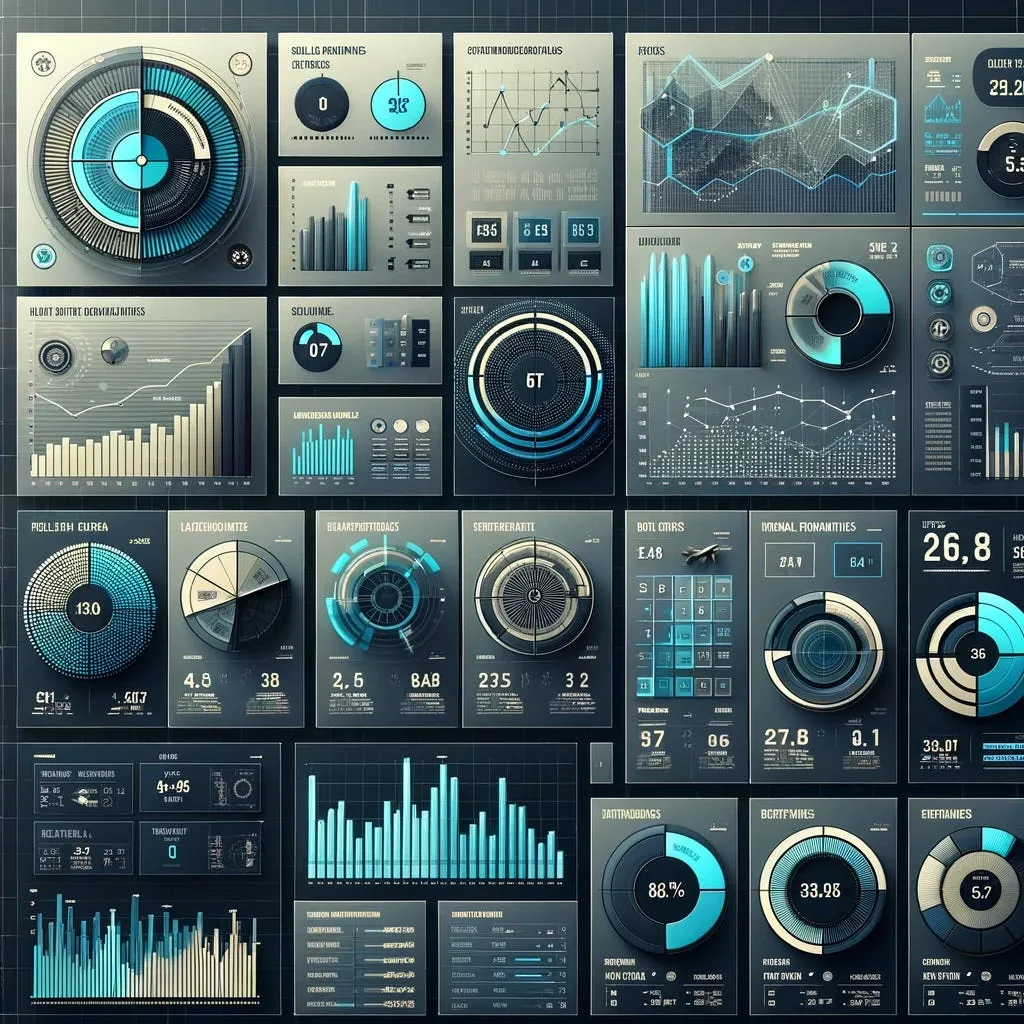 Should you do something? Or is everything okay? Illustration: Dall-E
Are dashboards well suited for the job?
Let’s evaluate our dashboard-strategy. Frequent monitoring is essential for timely decisions. However, in most cases, the decision after viewing a dashboard is to do nothing. And if it’s not, we are probably checking it too infrequently to take timely action.
For the best decisions, understanding all presented data is crucial. But if we’re frequently checking dashboards, how do we ensure that we’re processing all the data correctly? Without spending unnecessary time and cognitive effort?
Example: The Traditional Dashboard in a Coffee Shop Chain
Imagine a chain of coffee shops, each bustling with customers and staff working to provide the best service. The key to efficient operations here is ensuring that at every point in time, there are enough staff members to serve customers, but not so many that staff are idle. This delicate balance is crucial for both customer satisfaction and operational efficiency.
Traditionally, the company might use a monitoring dashboard to manage this. The dashboard displays real-time data on customer footfall, staff schedules, and sales figures. Someone in the main office, let’s call them the Staff Planner, is tasked with constantly watching this dashboard. Their job is to analyze trends, compare staffing levels with customer numbers, and make quick decisions to adjust staffing as needed. This process, while data-driven, is fraught with challenges:
- Constant Monitoring: The Staff Planner spends hours staring at the dashboard, looking for patterns and anomalies. This continuous monitoring is not only time-consuming but also mentally taxing, leading to decision fatigue.
- High Cognitive Load: Analyzing complex data under time pressure requires significant mental effort. The Staff Planner must process multiple data points and make judgment calls, often with incomplete information.
- Efficiency Concerns: While the dashboard provides data, it doesn’t offer clear guidance on when to act. The Staff Planner might spend considerable time deciding when there’s actually no action required.
In this traditional setup, the coffee shop chain relies heavily on the skills and attentiveness of the Staff Planner. However, this approach is not only resource-intensive but also prone to human error and bias.
Making and using dashboards
In order to have this dashboard in the first place, a Data Analyst, Business Analyst, Software Engineer or similar will have had to spend considerable time thinking and talking to decision makers what kinds of decisions it will be used for so that they can design it right, with the right data transformed and aggregated in the right way.
How is this for cost? We have a highly skilled worker spending a lot of time building a dashboard that lets a highly skilled worker spend considerable time and cognitive load reading the data, processing the data, and then making some decision about what to do, which most of the time will be nothing.
This is clearly inefficient. Also, it almost always leads people off the data-driven path into the data-inspired-, or the I-backed-up-what-I-felt-like-doing-with-data-path. But is there another way? If we don’t have this dashboard, won’t we be flying blind? Being dependent on the decision maker’s gut feeling about what will be the right thing to do?
The no-dashboards-way
True data-driven decisions happen when you decide on the decision criteria before seeing the data. Then your decision criteria can’t be influenced by how the data happen to turn out and what you deep down actually wanted to do in the first place. If you decide on the decision criteria beforehand you can’t make them be whatever fits what you want to do.
If you have already created the decision criteria before creating the dashboard, when you first start thinking about your decision situation, then you don’t really need the dashboard. You don’t need some person spending valuable cognitive capacity checking your collected data against the decision criteria. This is a trivially automatable cognitive task. The decision-maker can receive an alert in their favorite communication channel whenever they need to do something.
So how do we get there? Instead of focusing the data-driven decision process on the data, what data you will need and how to present it, focus on what will be decided. Rather than presentation, focus on criteria. What are you trying to accomplish with this decision? What are your options? What determines which option you should pick? What data could you see to make you want to act?
Example: Transition to Criteria-Driven Decision Making in the Coffee Shop Chain
Having seen the limitations of traditional dashboard monitoring in our coffee shop scenario, let’s explore a more efficient and effective approach: criteria-driven decision-making.
The Shift to Predefined Criteria
In this new approach, the coffee shop chain begins by defining clear, actionable criteria for staffing decisions. These criteria are based on data but are established in advance. For example, the company might set a standard ratio of staff to customers, or identify specific peak hours when additional staffing is mandatory. By doing so, the organization moves away from reactive decision-making to a proactive, strategic model.
Automating Alerts and Actions
Once these criteria are in place, the need for continuous monitoring by a Staff Planner is significantly reduced. Instead of constantly watching a dashboard, the system itself can alert managers when staffing adjustments are needed. For instance, if the customer forecast exceeds the capacity of scheduled staff, or vice versa, an automatic alert is sent out. This could be via email, text, or a notification in the company’s management app.
Advantages of focusing on decision criteria over dashboards
You will be able to check your data much more frequently, making it more likely that you are able to act at the right time.
Your decision is more transparent because the decision criteria are encoded and documented. This makes it possible to challenge the criteria, making them more robust. It also becomes much easier to evaluate your decision and improve on your criteria based on how your decisions turn out. Your decision quality won’t be affected by meal schedule, sleep pattern, general mood, or current theories and pet peeves.
Your decision-rig is much, much cheaper. It carries some overhead cost when you set it up as the decision criteria need to be defined, but on the other hand you won’t have to make a dashboard. But more importantly, you won’t be wasting valuable cognitive capacity. Perhaps we were onto something when our data dashboards were gauges with clearly marked danger zones indicating we needed to do something, combined with alarms.
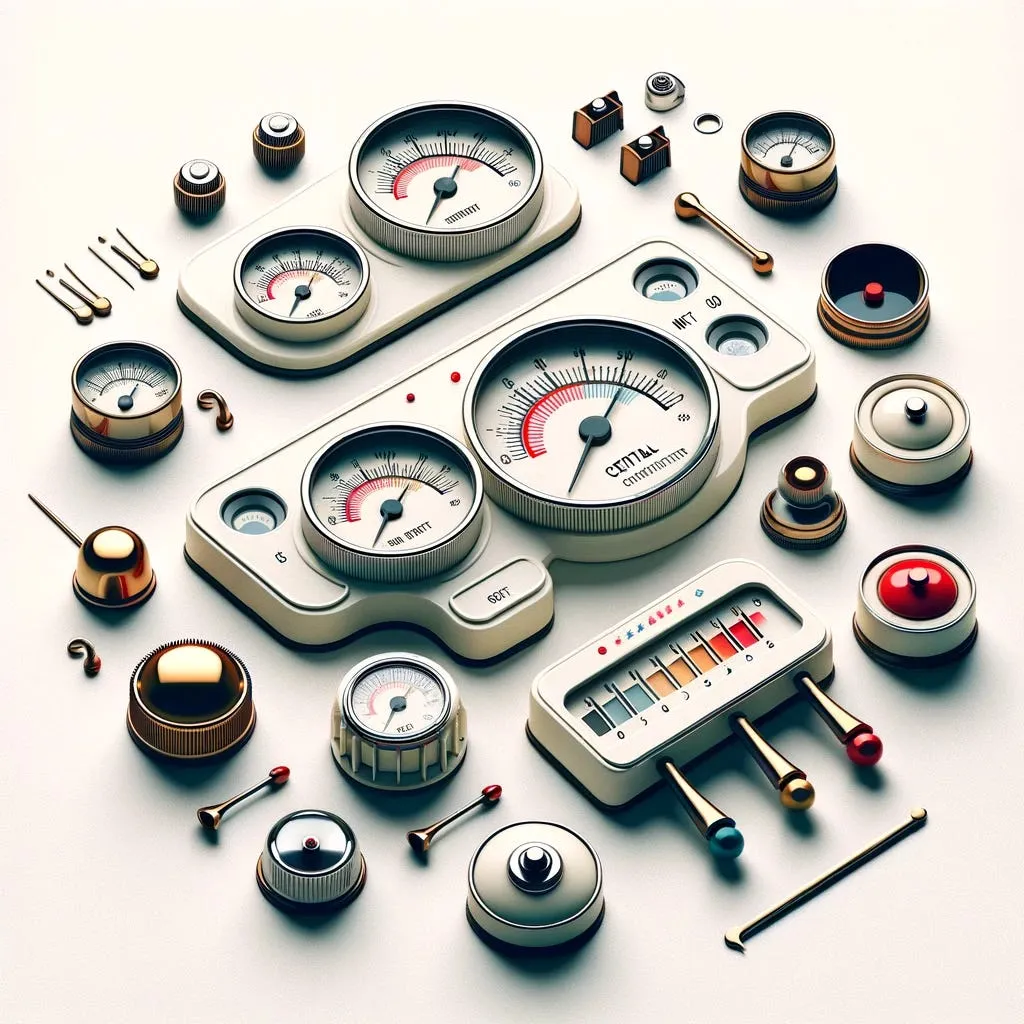 Old-school dashboard. Clearly marked decision criteria with alarms to alert you. Illustration: Dall-E
A Path to the Future: Beyond Dashboards
Our journey from the traditional dashboard-laden approach to an automated, criteria-driven decision-making process in the coffee shop chain exemplifies a broader shift that is essential in today’s data-rich world. This shift is not just about enhancing efficiency; it’s about redefining how decisions are made in organizations.
The organization that sets itself up without dashboards, but with a culture for defining the data required to make a decisions, with the right processes for defining and honing predefined decision criteria. That organization will be perfectly positioned to take the automation one step forward. So far we have talked about automating the alert to the decision maker that they need to act, saving them countless hours of making negative decisions. But the road is very short to also, especially for repetitive decisions, defining the relevant options, defining the criteria for selecting each option, and then automatically picking the best option, or presenting the decision maker with a ranked list of options with data to back it up, ready for the decision maker to sign off in a matter of seconds.
Example: Coffee shop revisited
Instead of traditional monitoring, the coffee shop adopts criteria-driven decision-making. They define actionable criteria for staffing, like staff-to-customer ratios. An automated system now alerts managers when adjustments are needed, reducing the cognitive load and ensuring timely, accurate decisions. Perhaps even send a group direct message in Slack to the manager and an available employee?
The Immediate Benefits
By adopting the criteria-driven approach, organizations can expect:
- Reduced Cognitive Load: Decision-makers are relieved from the constant monitoring of data, allowing them to focus on more strategic aspects of their role.
- Timely Actions: Automated alerts ensure that decisions are made at the most opportune time, enhancing the effectiveness of actions taken.
- Transparent Decision-Making: With predefined criteria, decisions are more objective and less influenced by biases, leading to consistent and defendable outcomes.
Setting the Stage for Advanced Automation
The implications of this shift go beyond just streamlining current processes. It sets the foundation for leveraging more advanced forms of AI and machine learning. As systems become more adept at learning and adapting, the role of human decision-makers will evolve. They will oversee and guide these intelligent systems, intervening only when exceptional situations arise or strategic decisions are needed.
Embracing Automated Cognition
As we look to the future, the concept of automated cognition – where systems not only provide data but also interpret it and make recommendations – becomes increasingly tangible. By killing our dependency on dashboards and embracing criteria-driven automation, we are taking the first step towards a future where decision-making is more precise, efficient, and aligned with our strategic goals.
Conclusion
The transition from dashboards to automated, criteria-driven decision-making is more than a technological upgrade; it’s a paradigm shift in how we approach data and decisions. It’s about creating systems that enhance our capabilities, not just display data. By embracing this change, organizations can not only improve their operational efficiency but also pave the way for a future where the full potential of data-driven decision-making is realized.
Killing your dashboards and becoming truly data-driven sets you off on the path that takes you, step-by-step, comfortably and safely, into the future of automated cognition.
Om forfatteren